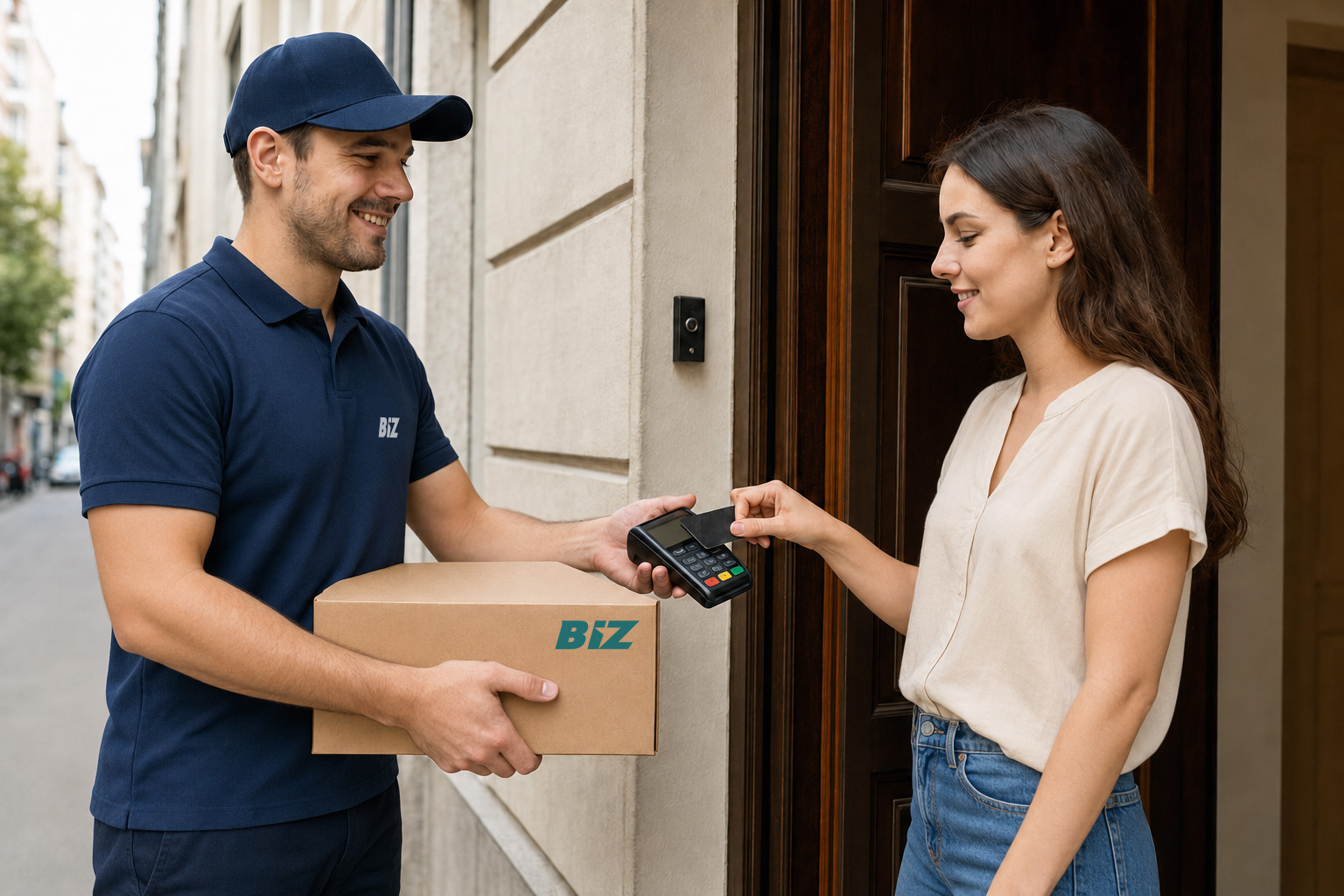
Cash on Delivery (COD) is a payment method in which the customer pays for an online order at the moment of delivery, in cash or by card at the door, instead of paying online at checkout.
While online payments dominate e-commerce across much of Western Europe, Cash on Delivery remains one of the preferred payment methods in many Central & Eastern European countries. For brands planning to expand into the region, having the ability to seamlessly offer and integrate the Cash on Delivery option, makes a substantial difference in terms of attaining more sales and winning customers.
However, accepting COD involves much more than allowing customers to pay when their order arrives. It also affects logistics, cash flow and the financial management of the entire operation.
Which countries still rely on Cash on Delivery?
Although digital payments continue to grow, Cash on Delivery remains relevant in markets such as:
- Hungary
- Romania
- Poland
- Czech Republic
- Slovakia
- Bulgaria
- Greece
- Slovenia
The level of adoption varies from one country to another, but the trend is clear: many consumers still expect to see Cash on Delivery as a payment option during checkout. Not offering it can significantly reduce conversion rates in some markets.
Why do consumers still prefer Cash on Delivery?
The main reason is trust. Particularly, when purchasing from a brand for the first time, many consumers prefer to pay only after receiving their order. This reduces the perceived risk of shopping online and makes it easier for customers to complete their purchase.
For e-commerce businesses, this often translates into higher conversion rates in markets where Cash on Delivery remains part of normal consumer behaviour.
The challenges many businesses discover too late
Offering Cash on Delivery also introduces new operational challenges.
The most common include:
- parcels refused at the point of delivery
- returns management
- payment reconciliation
- settlements in multiple currencies
- tracking collected funds until they reach the company's bank account
- buyers may not have sufficient cash, or the right change
- POS use on delivery may incur additional fees
The first of these deserves special attention. Because the customer commits nothing upfront, some COD orders end with a refusal at the door: it is structural to the model, not a failure of it.
The gap between orders placed and cash actually collected, known as the buyout or redemption rate, is the single most important number in a COD business. It is driven by delivery quality, timing, customer communication, and how quickly refused parcels return to sellable stock.
Without well-defined processes, business growth can quickly lead to greater operational complexity.
Reconciliation: the most important part of the process
One of the least visible aspects of Cash on Delivery is reconciliation. Collecting payment is only the beginning: reconciliation means being able to trace every collected amount from the customer’s door to the company’s bank account.
Done properly, it works on three levels:
- Order level: every delivered order matched with the amount collected, reference by reference.
- Settlement level: every incoming transfer matched to an identifiable batch of orders, with deductions itemised.
- Currency level: for cross-border operations, clarity on the currency in which each amount was collected, the currency in which it settles, and when and how conversion applies.
For companies selling across multiple countries, this level of traceability is essential to maintaining financial control. When these three levels exist, month-end reconciliation is a verification; when they do not, it is detective work, and it gets worse with every new market.
Choosing the right fulfillment partner matters
Before implementing Cash on Delivery across Central & Eastern Europe, businesses should ensure their logistics partner can provide:
- a clear settlement schedule
- order-level reconciliation
- returns and exception management
- full operational visibility
- multi-currency settlement management
- POS support where applicable
These capabilities have a direct impact on both the customer experience and the day-to-day management of the business.
Want to learn more about Cash on Delivery in Central & Eastern Europe?
Discover how our Cash on Delivery solution simplifies collection, reconciliation, and settlement, or talk to our team about the right setup for your markets, volumes, and collection cycle.